Best Dehumidifier for a Basement
Most basements need a 50-pint dehumidifier. For basements without a floor drain, get one with a built-in pump. The GE 50-Pint with Pump ($218) is the top pick for pump drainage, while the Midea Cube 50 ($260) is best overall with its massive 4.2-gallon tank.
Finished basement
Moderate to heavy
50-pint
Best Dehumidifier for a Basement: Top Picks Compared
| Model | Best For | Capacity | Coverage | Noise | Drainage | Price |
|---|---|---|---|---|---|---|
| GE 50-Pint with Pump | Best for Basements Without a Floor Drain | 50 pt | 4,500 sq ft | ~52 dB | Built-in pump (up to 16 ft) | $218 |
| Midea Cube 50-Pint Dehumidifier | Best Overall | 50 pt | 4,500 sq ft | ~47 dB | Gravity drain hose included | $260 |
| Ivation 50-Pint with Pump | Best With Pump | 50 pt | 4,500 sq ft | ~51 dB | Built-in pump + gravity drain | $249 |
Understanding Your Needs
Basements trap moisture because they sit below grade, where groundwater seepage, poor ventilation, and cool concrete surfaces create ideal conditions for condensation. A dehumidifier rated at 50 pints per day (DOE 2020 standard) handles finished basements up to about 1,500 sq ft with moderate dampness. If your basement smells musty, shows condensation on pipes, or feels clammy in summer, a 50-pint unit is the right call. For very large basements over 1,500 sq ft or those with active water intrusion, step up to a 70-pint unit or consider a dedicated crawl space dehumidifier.
Why These Picks
The GE 50-Pint with Pump earns the top spot because most basements lack a convenient floor drain. Its built-in pump pushes water up to 16 feet vertically to a sink, window, or any drain point. Set it up once and forget about it. If your basement does have a floor drain, the Midea Cube 50 is the better choice: its 4.2-gallon tank is 3x larger than competitors, and it runs at just 47 dB.
Top Picks

GE 50-Pint with Pump
GE
★4.6·3,239 ratings
The built-in pump pushes water up to 16 feet to a sink, window, or any drain. Set it and forget it. If your basement has no floor drain, this is the one.
- + Built-in pump drains up to 16 ft vertically
- + True set-and-forget operation
- + Sturdy, well-built construction
- + Easy-to-read display
- - No Wi-Fi or smart features
- - Louder than the Midea Cube (~52 dB)
- - Smaller tank (1.8 gal) if not using pump

Midea Cube 50-Pint Dehumidifier
Midea
★4.6·3,338 ratings
Fastest moisture removal in its class, quietest 50-pint unit available, and a 4.2-gallon tank that lasts days between empties. This is the unit most people should buy.
- + 3x larger tank than competitors (4.2 gal)
- + Quietest 50-pint unit (~47 dB)
- + Wi-Fi with Alexa and Google support
- + Compact cube design saves floor space
- + Gravity drain hose included
- - No built-in pump
- - App can be buggy on first setup

Ivation 50-Pint with Pump
Ivation
★4.6
A workhorse 50-pint compressor unit with a strong built-in pump that lifts water up to 16 feet vertically. Energy Star certified, 4,500 sq ft coverage, and a programmable humidistat make it a reliable pick for basements where a floor drain isn't an option.
- + Strong pump lifts water 16 ft vertically
- + Genuine 4,500 sq ft coverage
- + Energy Star certified
- + Auto-defrost, auto-restart, washable filter
- - No Wi-Fi or app control
- - Bulkier than newer Cube-style units
- - High fan speed is audible (~51 dB)
Complete Your Setup
Inexpensive add-ons most buyers pair with a new dehumidifier.

★4.6·5,341 ratings·$12.97
Run continuous gravity drainage to a floor drain or sump so you never empty the tank. Standard 1/2-inch hose port fits most units.
View on Amazon →
★4.7·5,250 ratings·$47.04
No floor drain nearby? This pump pushes water up and out to a sink or window. Pairs with any unit that lacks a built-in pump.
View on Amazon →
★4.6·62,078 ratings·$8.97
Track room humidity so you know your unit is hitting target. Aim for 30 to 50 percent to stop mold and dust mites.
View on Amazon →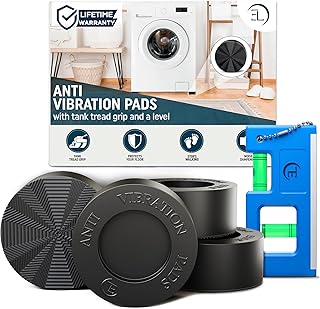
★4.3·4,927 ratings·$18.95
Stop compressor hum and walking on hard floors. Slip these under the feet to cut noise and keep the unit in place.
View on Amazon →
★4.6·18,723 ratings·$14.99
Share one spigot or drain line between the dehumidifier and another hose. Lead-free brass with independent on/off valves.
View on Amazon →Why Basements Need a Dehumidifier
Basements sit below grade, surrounded by soil that holds moisture year-round. Water migrates through concrete walls and floors via hydrostatic pressure, and cool surfaces create condensation even on dry days. Left unchecked, relative humidity above 60% triggers mold colonization within 24 to 48 hours. That mold spreads to floor joists, drywall, and stored belongings. Beyond mold, persistent dampness accelerates wood rot in structural framing and attracts dust mites that degrade indoor air quality throughout the home. A properly sized dehumidifier keeps basement humidity between 40% and 50%, eliminating these problems at the source.
Pump vs. Gravity Drain: Which Setup?
If your basement has a floor drain within hose reach of the dehumidifier, gravity drainage is the simplest option: attach a hose and let physics do the work. Most basements lack a conveniently located floor drain, though. That is where a built-in pump matters. The GE 50-Pint pumps water up to 16 feet vertically, pushing condensate to a sink, utility drain, or out a window. Once connected, it runs completely unattended. A pump model costs $20 to $40 more than a gravity-only unit, and for basements, it is almost always worth the upgrade.
Sizing a Dehumidifier for Your Basement
A 1,000 sq ft basement with moderate dampness needs a 50-pint dehumidifier. Finished basements with drywall and carpet hold less ambient moisture than unfinished ones with exposed concrete and bare floors, but both benefit from the 50-pint class. Unfinished spaces release more moisture from exposed concrete and soil vapor, which is why our calculator applies a 1.3x modifier for finished basements and 1.5x for unfinished ones. If your basement exceeds 1,500 sq ft or has active water intrusion, step up to a 70-pint unit.
What It Costs to Run
A 50-pint Energy Star dehumidifier draws roughly 500 watts. Running 12 hours per day at the national average of $0.16 per kWh, that comes to about $1 per day or $30 per month during humid season. Energy Star certified models save 15% to 20% compared to standard units over the same period. Most basements only need continuous operation from May through September; the rest of the year, the unit cycles on and off as needed, cutting costs further. Use our energy cost calculator for an estimate based on your local electricity rate.
Frequently Asked Questions
What is the best rated basement dehumidifier?
The GE 50-Pint with Pump is the top-rated basement dehumidifier for most homes. Its integrated pump handles drainage in basements without floor drains, it covers up to 1,500 sq ft, and it scores 9.2 out of 10 across capacity, noise, and build quality. The Midea Cube 50-Pint is the best alternative if your basement has a floor drain, thanks to its 4.2-gallon tank and 47 dB noise level.
Will a basement dehumidifier prevent mold?
Yes. Mold requires relative humidity above 60% to grow. A dehumidifier that maintains your basement between 40% and 50% RH starves mold spores of the moisture they need. This is the single most effective intervention for basement mold prevention. If mold already exists, remove it first with proper remediation, then keep the dehumidifier running to prevent recurrence.
What size dehumidifier do I need for a 1,000 sq ft basement?
A 50-pint dehumidifier handles a 1,000 sq ft basement with moderate dampness. If the space is only slightly damp and fully finished with drywall, a 35-pint unit may suffice. For unfinished basements or spaces with visible condensation and musty odors, stick with 50 pints. Basements larger than 1,500 sq ft or those with active water intrusion should step up to 70 pints.
Do I need a dehumidifier with a pump for my basement?
If your basement has a floor drain within a few feet of where the unit will sit, gravity drainage works fine. Otherwise, yes, get a pump model. A built-in pump pushes condensate vertically to a sink, utility drain, or window, so you never have to empty a bucket. The GE 50-Pint pumps water up to 16 feet, which covers most basement-to-first-floor drain scenarios.
Sizing Note
Basements get a 1.3x sizing modifier in our calculator because below-grade spaces retain more moisture than above-ground rooms of the same size. See the basement dehumidifier size chart for a full square-footage to pint-capacity table.
Related Guides
Or use the sizing calculator and the basement size chart for exact pint capacity.
Not sure this is the right fit?
Use our free sizing calculator to get a personalized recommendation based on your exact room size, dampness level, and climate zone.
Try the Sizing Calculator