
For most basements and large rooms (1,000+ sq ft), you need a 50-pint dehumidifier. For bedrooms and smaller spaces under 500 sq ft, a 20–35 pint unit is enough. The key factors are your room's square footage, whether it's a basement or above ground, and how damp it actually is.
Important: The DOE changed how dehumidifiers are rated in 2020. A unit that used to be called “70-pint” is now rated at 50 pints. Same machine, different label. Every recommendation on this page uses the current DOE standard.
Dehumidifier Sizing Calculator
Where is the dehumidifier going?
Common Recommendations
The most common dehumidifier scenarios with our top pick for each.

Best Dehumidifier for a Basement
Top pick: GE — $294
50-pint
Most basements need a 50-pint dehumidifier.
Best Dehumidifier for a Crawl Space
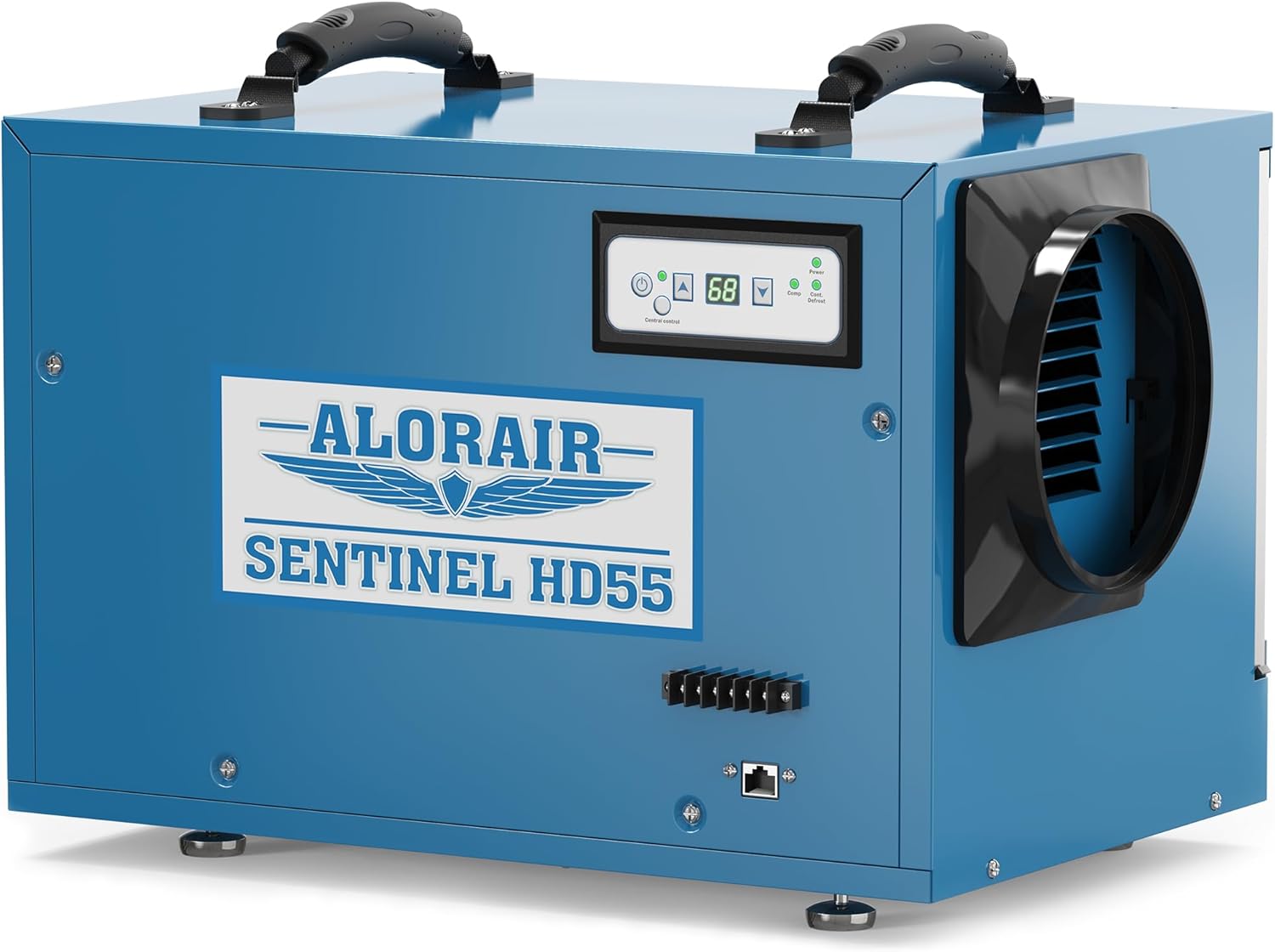
Top pick: AlorAir — $446
Commercial
Standard consumer dehumidifiers are not designed for crawl spaces.

Best Dehumidifier for a Bathroom
Top pick: Midea — $199
20-pint
A 20-pint dehumidifier is plenty for a bathroom or laundry room.
Best Dehumidifier for a Bedroom
Top pick: Midea — $199
20-pint
For bedrooms, noise is the deciding factor.

Best Whole-House Dehumidifier
Top pick: Midea — $260
50-pint
The Midea Cube 50 ($260) is the best whole-house dehumidifier for most homes.

Best Dehumidifier for a Garage
Top pick: VEAGASO — $130
35-50 pint
A 2-car garage typically needs a 35-pint dehumidifier; larger or damper garages need 50 pints.
Best Dehumidifier for an Apartment
Top pick: Midea — $199
20-35 pint
Most apartments need a 20 to 35-pint dehumidifier depending on size and dampness.
Best Budget Dehumidifier
Top pick: VEAGASO — $130
20-50 pint (budget tier)
The best budget dehumidifier depends on your space.
Use the calculator for a personalized result based on your room size and dampness level.
Common Sizing Questions
Wondering what size dehumidifier you need for a basement? The basement size chart maps square footage and dampness straight to a pint capacity.
What size dehumidifier do I need for a 1000 sq ft basement?
A 1,000 sq ft basement with moderate dampness needs a 50-pint dehumidifier. Our calculator applies a 1.3x basement modifier because below-grade spaces retain more moisture than above-ground rooms. At moderate dampness in a moderate climate, the math works out to about 39 pints/day, which puts you solidly in the 50-pint tier. The Midea Cube 50 ($260) is the best overall choice with its 4.2-gallon tank and quiet operation. If your basement lacks a floor drain, the GE 50-Pint with Pump ($294) is the better option since it pushes water up to 16 feet to any drain point. For a finished basement that is only slightly damp, a 35-pint unit like the VEAGASO 34-Pint ($130) can handle the job.
Best dehumidifier for a damp bathroom?
A 20-pint dehumidifier handles bathroom humidity effectively. Bathrooms generate intense but temporary humidity spikes from hot showers, so you need a unit that responds quickly rather than one with massive capacity. The Midea Cube 20 ($199) is the top bathroom pick: its compact cube design fits in tight spaces, it runs at just 45 dB, and the 3.2-gallon tank means you empty it every few days instead of daily. The Midea 22-Pint ($190) is the slimmer alternative if floor space is tight, and its hose socket supports continuous drainage. If your bathroom has persistent mold issues despite a working exhaust fan, the dehumidifier fills the gap that ventilation alone cannot handle.
Do I need a whole-house dehumidifier?
You need a whole-house dehumidifier if humidity is a persistent problem throughout your home rather than limited to one room, especially in homes over 2,500 sq ft. Signs include condensation on windows in multiple rooms, musty smell on different floors, and allergy symptoms that do not improve with portable units. A whole-home ducted dehumidifier from Santa Fe or AprilAire ($1,500-$3,500 installed) ties into your HVAC ductwork and conditions all circulating air. For homes under 2,000 sq ft, try a strong 50-pint portable unit in the basement first, since basement moisture migrates upward and a single well-placed unit often solves the whole house. The Midea Cube 50 ($260) or GE 50-Pint with Pump ($294) are the strongest portable options.
What room size does a 35-pint dehumidifier cover?
A 35-pint dehumidifier (DOE 2020 standard) covers a moderately damp space of roughly 1,500 to 3,000 sq ft, or a smaller space that is quite damp. It is the right size for a medium bedroom, an apartment, a small finished basement under 1,000 sq ft, or a 2-car garage. The VEAGASO 34-Pint ($130) is the top 35-pint pick. For comparison, a 20-pint unit covers small rooms under 1,500 sq ft and a 50-pint unit covers large or wet basements up to 4,500 sq ft. Match the pint rating to your square footage and dampness, not just the room name.
What is the best basement dehumidifier with a pump?
The GE 50-Pint with Pump ($294) is the best basement dehumidifier with a built-in pump. Most basements lack a convenient floor drain, and the GE pump pushes condensate up to 16 feet vertically to a sink, window, or any drain point, so it runs unattended for the whole humid season. It covers up to 1,500 sq ft and is the cheapest 50-pint unit with an integrated pump, which saves you the cost of a separate condensate pump. If your basement does have a floor drain, the Midea Cube 50 ($260) with its 4.2-gallon tank is the better overall choice.
More Tools
Beyond sizing, these calculators help you plan the full setup.
What Size Dehumidifier for a Basement?
Size chart by square footage for damp, very damp, and wet basements, plus how to size it in 4 steps.
Energy Cost Calculator
Find out how much a dehumidifier costs to run per month and year.
Mold Risk Assessment
Check your home's mold risk and get action steps.
Drainage Setup Guide
Pump, gravity drain, or bucket? Find the right setup.
How Many Dehumidifiers Do I Need?
One unit or several for a basement, multiple rooms, or multiple floors.
Best Dehumidifiers by Size
Every product uses the current DOE 2020 pint rating. Prices are approximate and may vary.
50-Pint Class — Large Basements, Whole Floors, Most Homes
MOST POPULAR
Midea Cube 50-Pint Dehumidifier
Midea
★3.5·327 ratings
Fastest moisture removal in its class, quietest 50-pint unit available, and a 4.2-gallon tank that lasts days between empties. This is the unit most people should buy.
- + 3x larger tank than competitors (4.2 gal)
- + Quietest 50-pint unit (~47 dB)
- + Wi-Fi with Alexa and Google support
- + Compact cube design saves floor space
- + Gravity drain hose included
- - No built-in pump
- - App can be buggy on first setup
GE 50-Pint with Pump
GE
★3.3·107 ratings
The built-in pump pushes water up to 16 feet to a sink, window, or any drain. Set it and forget it. If your basement has no floor drain, this is the one.
- + Built-in pump drains up to 16 ft vertically
- + True set-and-forget operation
- + Sturdy, well-built construction
- + Easy-to-read display
- - No Wi-Fi or smart features
- - Louder than the Midea Cube (~52 dB)
- - Smaller tank (1.8 gal) if not using pump
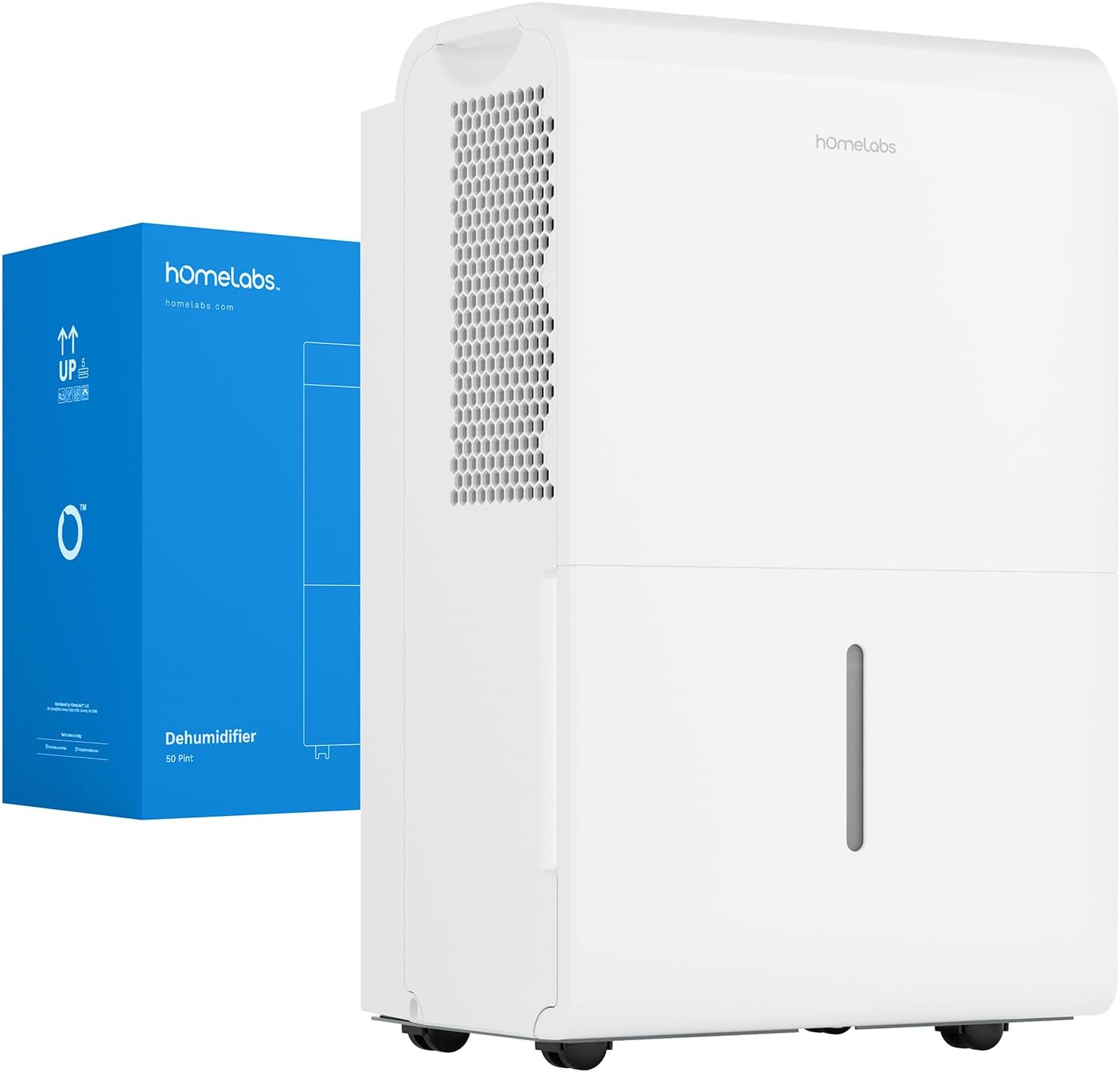
hOmeLabs 50-Pint Wi-Fi
hOmeLabs
★4.4·25,686 ratings
The most-reviewed 50-pint dehumidifier on Amazon, with over 25,000 ratings. Covers up to 7,000 sq ft, removes 50 pints per day (120-pint max at 95°F/90% RH), and adds Wi-Fi app control at a price well under the premium smart units.
- + 25,000+ Amazon ratings, proven track record
- + 7,000 sq ft coverage rating
- + Wi-Fi app control included
- + Turbo mode boosts fan from 188 to 218 CFM
- + Continuous-drain hose outlet
- - No built-in pump
- - Smaller tank than the Midea Cube

Ivation 50-Pint with Pump
Ivation
★4.1·1,027 ratings
A workhorse 50-pint compressor unit with a strong built-in pump that lifts water up to 16 feet vertically. Energy Star certified, 4,500 sq ft coverage, and a programmable humidistat make it a reliable pick for basements where a floor drain isn't an option.
- + Strong pump lifts water 16 ft vertically
- + Genuine 4,500 sq ft coverage
- + Energy Star certified
- + Auto-defrost, auto-restart, washable filter
- - No Wi-Fi or app control
- - Bulkier than newer Cube-style units
- - High fan speed is audible (~51 dB)
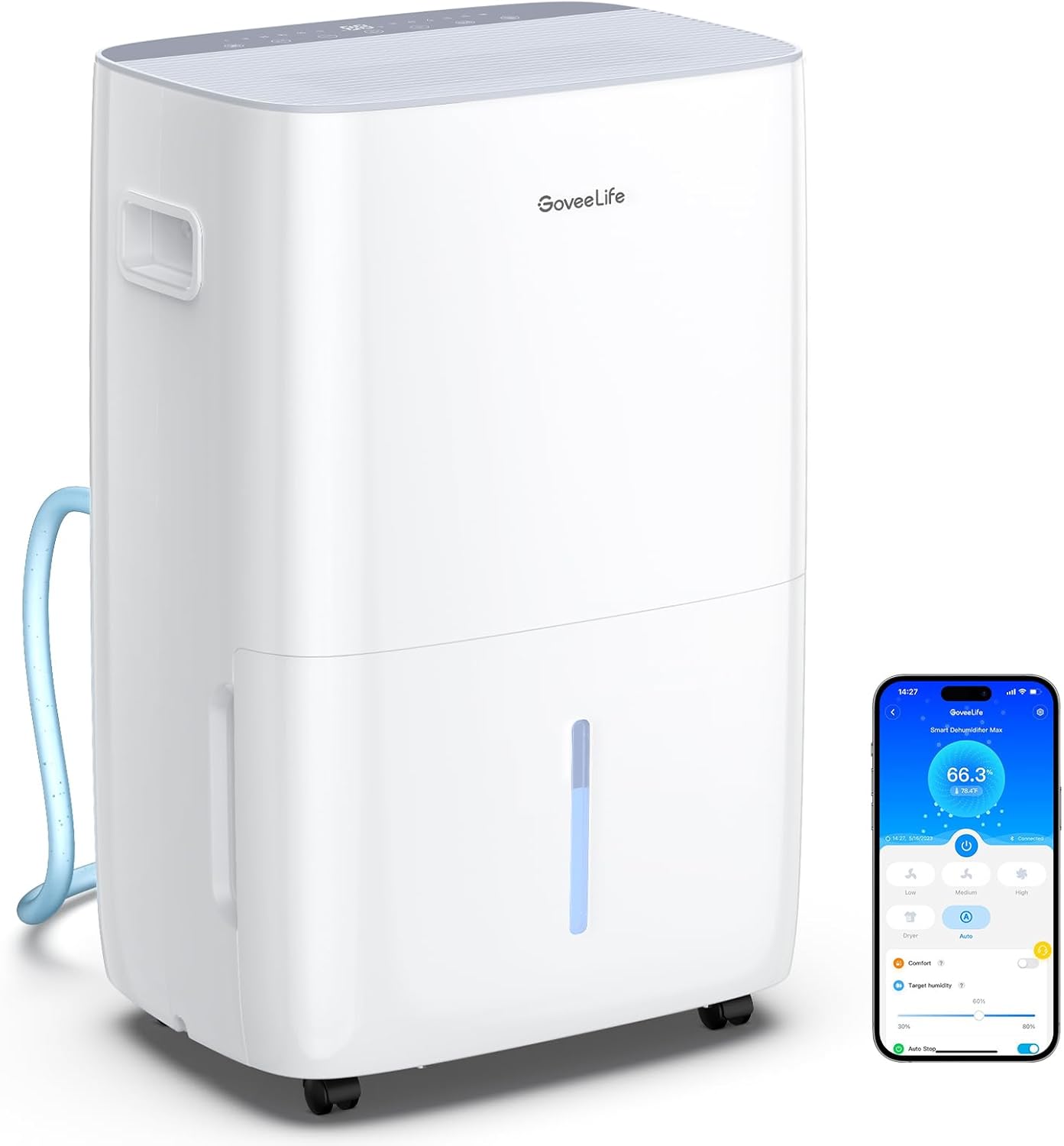
GoveeLife 50-Pint
GoveeLife
★4·1,600 ratings
Energy Star Most Efficient certified with the lowest electricity cost over time. Good smart features at a mid-range price.
- + Energy Star Most Efficient certified
- + Lowest long-term electricity cost
- + Wi-Fi with Alexa and Google
- + Good price-to-performance ratio
- - Standard 1.8 gal tank
- - No built-in pump
- - Slightly louder than Midea (~50 dB)

hOmeLabs 50-Pint with Pump
hOmeLabs
★4.6·15,326 ratings
Built-in pump pushes condensate upward to a sink or out a window for true set-and-forget drainage, and the Wi-Fi app lets you monitor it remotely. Rated for 7,500 sq ft with 50 pints per day of removal (120-pint max at saturation).
- + Built-in pump for upward continuous drainage
- + Wi-Fi app control
- + 7,500 sq ft coverage rating
- + Washable filter, auto shutoff and restart
- - Costs more than gravity-drain 50-pint units
- - Heavier to move at 30.5 lbs
35-Pint Class — Medium Rooms, Small Basements
VEAGASO 34-Pint
VEAGASO
★4.5·3,074 ratings
The highest-rated unit in the 34-pint class. Covers 2,500 sq ft, runs at 40 dB or less in low and sleep mode (quiet enough for a bedroom), and includes a drain hose for continuous draining out of the box.
- + Highest rating in its class (4.5 stars)
- + 40 dB or less in low/sleep mode
- + Drain hose included for continuous draining
- + Auto defrost and 24-hour timer
- - Small 0.53 gal tank needs frequent emptying
- - No Wi-Fi or smart features
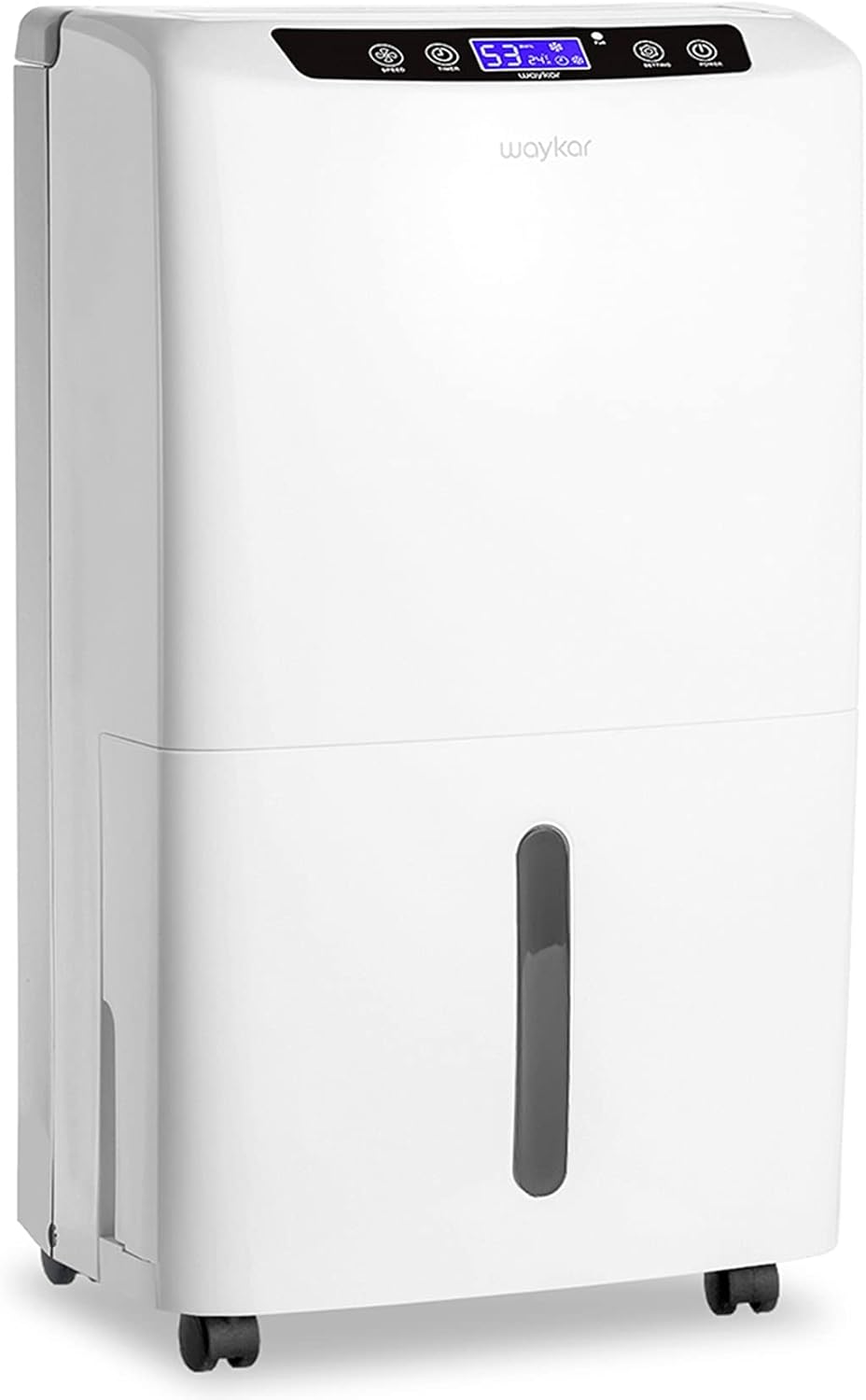
Waykar 34-Pint
Waykar
★4.3·22,738 ratings
One of the most-purchased mid-size dehumidifiers on Amazon with over 22,000 ratings. Covers 2,000 sq ft, holds humidity anywhere from 30% to 80%, and ships with a drain hose for continuous draining.
- + 22,000+ Amazon ratings
- + Drain hose included for continuous draining
- + 30–80% humidity control range
- + 2025 Energy Star certified
- - No smart features
- - Smaller 2,000 sq ft coverage than class rivals
20-Pint Class — Small Rooms, Bedrooms, Apartments
Midea Cube 20 Pint
Midea
★4·2,548 ratings
The 3x larger tank means you empty it once every few days instead of daily. Wi-Fi control lets you monitor from your phone. Quiet enough for a bedroom.
- + 3x larger tank than competitors (3.2 gal)
- + Wi-Fi with Alexa and Google
- + Quiet enough for bedrooms (~45 dB)
- + Compact cube design
- + Gravity drain hose included
- - Higher price than basic 20-pint units
- - Cube shape takes more floor space

Midea 22-Pint
Midea
★4.4·7,208 ratings
A classic flat-profile alternative to the Midea Cube 20: same 1,500 sq ft class and Wi-Fi with Alexa, but with a standard hose socket for continuous drainage and a slimmer footprint. Quiet-running per Midea, Energy Star certified.
- + Wi-Fi enabled, works with Alexa
- + Continuous drainage via standard hose socket
- + Wide 35–85% humidity control range
- + Reusable, washable air filter
- - Small 0.8 gal tank needs frequent emptying
- - Drain hose not included
70-Pint & Commercial — Severe Moisture, Crawl Spaces, Very Large Spaces

Shinco 70-Pint with WiFi & Pump
Shinco
★3.8·1,366 ratings
Upgraded Shinco model with built-in pump, WiFi app control, and Energy Star certification. Covers up to 7,000 sq ft and handles very large basements where you need serious moisture removal.
- + Built-in pump for hassle-free drainage
- + WiFi app control for remote adjustments
- + Energy Star certified
- + Covers up to 7,000 sq ft
- - Louder than 50-pint units (~56 dB)
- - Moderate tank (1.85 gal) if not using pump
- - Lesser-known brand compared to Midea/GE
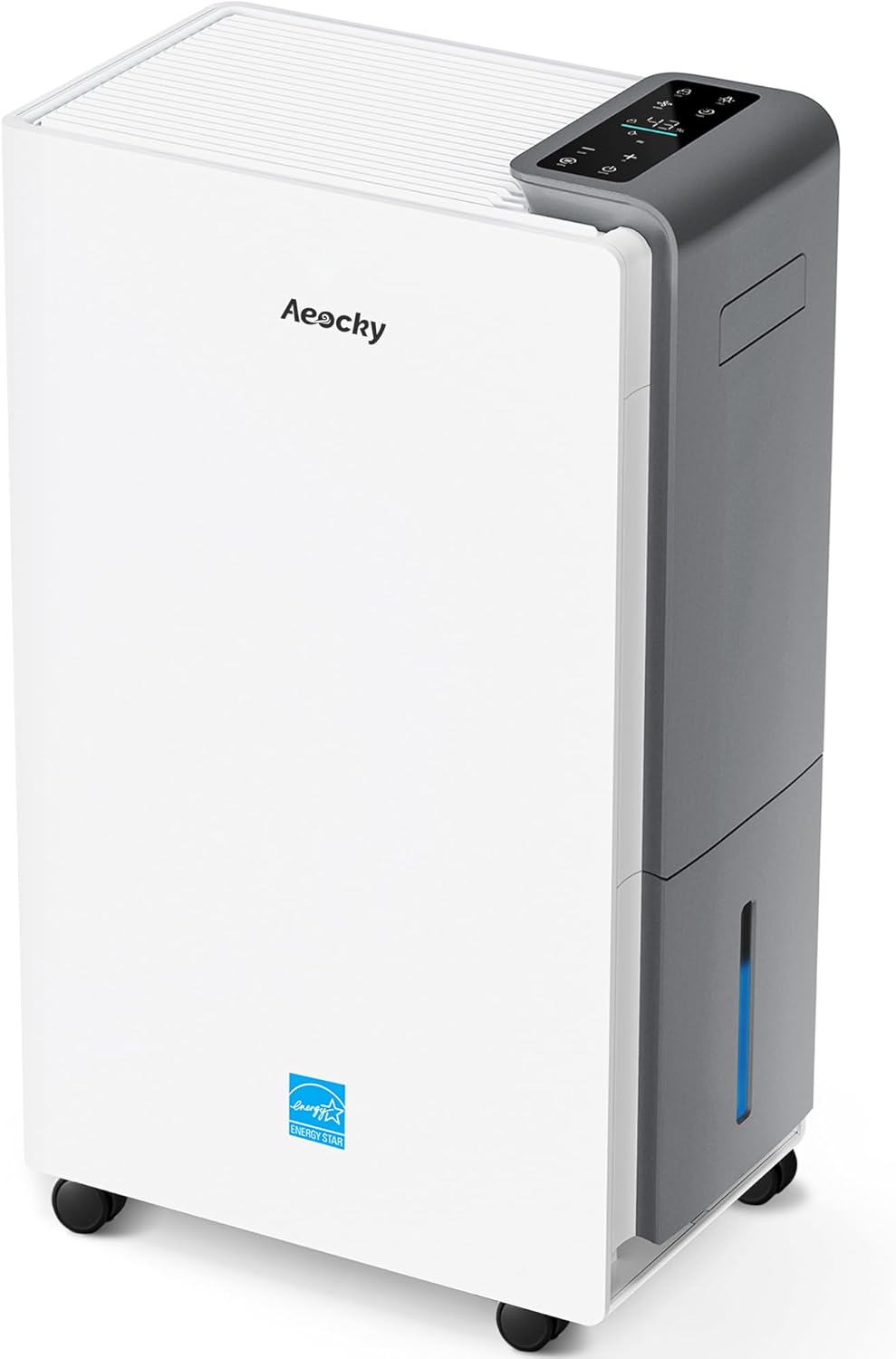
AEOCKY 80-Pint
AEOCKY
★4.5·7,256 ratings
Highest capacity in this tier. Built-in pump is a bonus at this price point. A strong pick for very large or very wet basements.
- + 80-pint capacity (highest available)
- + Built-in pump included
- + Wi-Fi connectivity
- + Great price for the capacity
- - Lesser-known brand
- - Long-term reliability unknown
- - Standard 1.9 gal tank
AlorAir Sentinel HD55
AlorAir
★4.2·1,228 ratings
Purpose-built for crawl spaces and harsh environments. Operates down to 36°F, metal construction, continuous drain only. This is what restoration professionals use. 5-year warranty.
- + Works down to 36°F (most units stop at 41°F)
- + Metal construction survives harsh environments
- + Continuous drain only (no bucket to empty)
- + 5-year warranty
- + Auto-defrost for cold environments
- - Expensive (~$450, priciest unit here)
- - No portable tank option
- - No smart features
- - Overkill for standard rooms
Whole-Home Ducted Systems
For homes over 2,500 sq ft or where humidity is a whole-house problem, a portable unit may fall short. Whole-home ducted dehumidifiers tie into your HVAC system and run $1,500–$3,500 installed. Santa Fe and AprilAire are the leading brands. Professional sizing and installation is recommended.
Complete Your Setup
Inexpensive add-ons most buyers pair with a new dehumidifier.

★4.6·5,341 ratings·$12.97
Run continuous gravity drainage to a floor drain or sump so you never empty the tank. Standard 1/2-inch hose port fits most units.
View on Amazon →
★4.7·5,250 ratings·$47.04
No floor drain nearby? This pump pushes water up and out to a sink or window. Pairs with any unit that lacks a built-in pump.
View on Amazon →
★4.6·62,078 ratings·$8.97
Track room humidity so you know your unit is hitting target. Aim for 30 to 50 percent to stop mold and dust mites.
View on Amazon →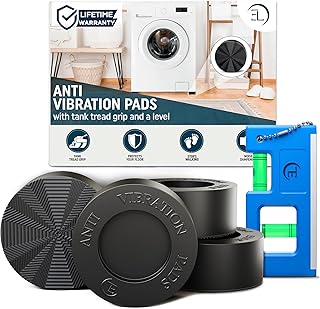
★4.3·4,927 ratings·$18.95
Stop compressor hum and walking on hard floors. Slip these under the feet to cut noise and keep the unit in place.
View on Amazon →
★4.6·18,723 ratings·$14.99
Share one spigot or drain line between the dehumidifier and another hose. Lead-free brass with independent on/off valves.
View on Amazon →Quick Reference: What Size Do You Need?
| Space | Dampness | You Need | Top Pick |
|---|---|---|---|
| Bedroom / small room (under 500 sq ft) | Moderate | 20-pint | Midea Cube 20 (~$199) |
| Apartment (500–1,000 sq ft) | Moderate | 35-pint | VEAGASO 34-Pint (~$130) |
| Finished basement (under 1,000 sq ft) | Moderate to damp | 50-pint | Midea Cube 50 (~$260) |
| Finished basement (1,000+ sq ft) | Damp | 50-pint | GE 50-Pint w/ Pump (~$294) |
| Unfinished basement / crawl space | Very damp to wet | 50–70 pint | AlorAir Sentinel HD55 (~$450) |
| Whole floor or large open area | Moderate | 50-pint | hOmeLabs 50-Pint Wi-Fi (~$270) |
| Bathroom / laundry room | High humidity events | 20-pint | Midea Cube 20 (~$199) |
| RV / boat | Varies | 20-pint (compact) | Midea Cube 20 (~$199) |
| Whole home (2,500+ sq ft) | Persistent | Ducted system | Santa Fe / AprilAire (pro install) |
Everything You Need to Know About Dehumidifier Sizing
What do the pint ratings actually mean?
A 50-pint dehumidifier removes 50 pints (about 6.25 gallons) of water from the air per day under DOE test conditions (65°F, 60% RH). In very humid conditions, actual removal may be higher. In mild conditions, it cycles on and off as needed. Think of the pint rating as the maximum capacity, not what it removes every single day.
Why did dehumidifier sizes change? (The DOE 2020 standard explained)
In 2020, the DOE changed the test conditions from 80°F/60% RH to 65°F/60% RH. This is more realistic — most basements and rooms aren't 80 degrees. The result: a unit formerly rated at 70 pints is now rated at 50 pints. Same machine, same performance, different number on the box. Every recommendation on this page uses the current (2020) DOE standard. If you're comparing with older reviews that mention “70-pint” models, those are equivalent to today's “50-pint” units.
Can a dehumidifier be too big?
Yes. An oversized unit costs more upfront, uses more electricity, and cycles on and off more frequently (which can reduce its effectiveness and lifespan). Buy for your actual conditions.
Do I need a built-in pump?
If your dehumidifier will sit in a basement without a nearby floor drain, yes. A built-in pump pushes collected water up to 16 feet to a sink, window, or drain. Without a pump, your only options are emptying the bucket by hand or gravity draining via hose to a floor drain (requires the drain to be lower than the unit). For set-it-and-forget-it basement operation, a pump is worth the extra $30–50.
What about continuous drain vs. pump drain?
Continuous drain (gravity drain) means you attach a hose and water flows downhill to a floor drain. Simple and free, but only works if you have a drain lower than the unit. Pump drain means water is pumped upward through a hose. Works even if the nearest drain is above the dehumidifier. More expensive but much more flexible. Some units include both options.
How loud are dehumidifiers?
Most modern 50-pint units run 47–55 dB. For reference: 45 dB is a quiet library, 50 dB is moderate rainfall, 55 dB is a normal conversation. If the unit will be in a living space or bedroom, prioritize models under 50 dB. In a basement, noise barely matters.
Should I get a smart dehumidifier?
If you're putting it in a basement or crawl space you don't visit daily, yes. Wi-Fi models let you check humidity levels, get alerts when the tank is full, and adjust settings from your phone. If it's in the same room as you, smart features are nice but not essential.
Frequently Asked Questions
What size dehumidifier do I need for my basement?
Most basements need a 50-pint dehumidifier. For small basements under 500 sq ft that are only slightly damp, a 35-pint unit may suffice. For large, wet basements or crawl spaces, consider a 70-pint unit or a dedicated crawl space dehumidifier like the AlorAir Sentinel HD55.
What size dehumidifier do I need for 1,000 square feet?
For a moderately damp 1,000 sq ft space, a 50-pint dehumidifier is the standard recommendation. If the space is above ground and only slightly damp, you might get away with 35 pints.
What's the difference between a 35-pint and 50-pint dehumidifier?
A 35-pint unit removes about 4.4 gallons of water per day; a 50-pint removes about 6.25 gallons. The 50-pint covers larger or damper spaces and is the right choice for most basements. The 35-pint is better for bedrooms, apartments, and smaller above-ground rooms.
Is a 50-pint dehumidifier the same as an old 70-pint?
Yes. In 2020, the DOE changed the testing conditions, which lowered the rated capacity of all dehumidifiers by about 30%. A "50-pint" dehumidifier today is the same machine as a "70-pint" dehumidifier before 2020.
What size dehumidifier do I need for a crawl space?
Crawl spaces need heavy-duty units rated for low temperatures and high humidity. The AlorAir Sentinel HD55 is purpose-built for this. It operates down to 36°F, has no bucket (continuous drain only), and has a metal casing for harsh conditions. Standard consumer dehumidifiers are not designed for unfinished crawl spaces.
Do I need a dehumidifier with a pump?
If the dehumidifier is in a basement without a floor drain nearby, a built-in pump is highly recommended. It pushes water up to 16 feet to a sink, window, or any drain. Without a pump, you'll need to empty the bucket manually or run a gravity drain hose to a lower drain.
What humidity level should I set my dehumidifier to?
Between 30% and 50% relative humidity. Most people find 45–50% comfortable. Below 30% and the air feels too dry. Above 60% and you risk mold growth. Most dehumidifiers have a built-in humidistat that automatically cycles the unit on and off to maintain your target.
How much electricity does a dehumidifier use?
A typical 50-pint Energy Star dehumidifier uses about 500 watts. Running it 12 hours a day costs roughly $1–$2 per day depending on your electricity rate. Energy Star certified models are 15–20% more efficient than non-certified units.
Can I use a dehumidifier instead of AC?
No. Dehumidifiers remove moisture but actually generate a small amount of heat as a byproduct. They make the air feel less muggy, but they don't cool it. In humid climates, using a dehumidifier alongside your AC is the right approach.
What's the best dehumidifier brand?
Midea delivers the best overall performance with innovative design. GE has the best built-in pump option. hOmeLabs has the largest install base, with the most-reviewed 50-pint unit on Amazon. For crawl spaces and commercial use, AlorAir is the professional standard.
When should I run my dehumidifier?
Run it whenever indoor humidity exceeds 50%. In most climates, that means spring through fall. In humid climates like the Southeast, you may need it year-round. Most modern units have auto mode — set your target humidity and let the unit cycle on and off as needed.
How do I know if I need a dehumidifier?
Signs include: condensation on windows or pipes, musty smell, damp feeling on skin or clothes, visible mold or mildew, water stains on walls or ceiling, warping of wood floors, and allergy symptoms that worsen indoors. A $10 digital hygrometer can confirm — if relative humidity is consistently above 55–60%, you need a dehumidifier.