Best Whole-House Dehumidifier
The Midea Cube 50 ($260) is the best whole-house dehumidifier for most homes. It is rated for 4,500 sq ft, and placed at the moisture source (usually the basement) it dries the floors above it. A ducted Santa Fe or AprilAire system runs $1,500 to $3,500 installed; one or two 50-pint portables get the same house under 50% RH for a fraction of that.
Whole home
Moderate to persistent
50-pint
Best Whole-House Dehumidifier: Top Picks Compared
| Model | Best For | Capacity | Coverage | Noise | Drainage | Price |
|---|---|---|---|---|---|---|
| Midea Cube 50-Pint Dehumidifier | Best Overall | 50 pt | 4,500 sq ft | ~47 dB | Gravity drain hose included | $260 |
| GE 50-Pint with Pump | Best for Basements Without a Floor Drain | 50 pt | 4,500 sq ft | ~52 dB | Built-in pump (up to 16 ft) | $218 |
| GoveeLife 50-Pint | Most Energy Efficient | 50 pt | 4,500 sq ft | ~50 dB | Gravity drain | $240 |
Understanding Your Needs
Whole-house humidity is usually a basement problem wearing a whole-house disguise. Moist air rises from the lowest level through stairwells and duct chases (the stack effect), so sticky bedrooms upstairs often trace back to a damp basement or crawl space. That is good news for your budget: treat the source and you rarely need equipment on every floor. A ducted dehumidifier tied into your HVAC system conditions all the air in the house, but at $1,500 to $3,500 installed it costs roughly ten times what a strong portable does, and it needs professional sizing and installation. For most homes up to about 3,000 sq ft, one 50-pint portable (DOE 2020 rating) placed at the moisture source, or two units splitting the house, holds every room under 50% RH for under $500 in equipment.
Why These Picks
The Midea Cube 50 leads because its 4,500 sq ft coverage rating and 4.2-gallon tank give a single unit the best shot at whole-floor dehumidification, and at 47 dB it is quiet enough for living space. If your damp zone is a basement without a floor drain, the GE 50-Pint with Pump pushes water up to 16 feet to a sink or window and runs unattended all season. The GoveeLife 50-Pint is the efficiency pick: same 4,500 sq ft coverage, Energy Star certified, and $20 cheaper than the Midea.
Top Picks

Midea Cube 50-Pint Dehumidifier
Midea
★4.6·3,338 ratings
Fastest moisture removal in its class, quietest 50-pint unit available, and a 4.2-gallon tank that lasts days between empties. This is the unit most people should buy.
- + 3x larger tank than competitors (4.2 gal)
- + Quietest 50-pint unit (~47 dB)
- + Wi-Fi with Alexa and Google support
- + Compact cube design saves floor space
- + Gravity drain hose included
- - No built-in pump
- - App can be buggy on first setup

GE 50-Pint with Pump
GE
★4.6·3,239 ratings
The built-in pump pushes water up to 16 feet to a sink, window, or any drain. Set it and forget it. If your basement has no floor drain, this is the one.
- + Built-in pump drains up to 16 ft vertically
- + True set-and-forget operation
- + Sturdy, well-built construction
- + Easy-to-read display
- - No Wi-Fi or smart features
- - Louder than the Midea Cube (~52 dB)
- - Smaller tank (1.8 gal) if not using pump
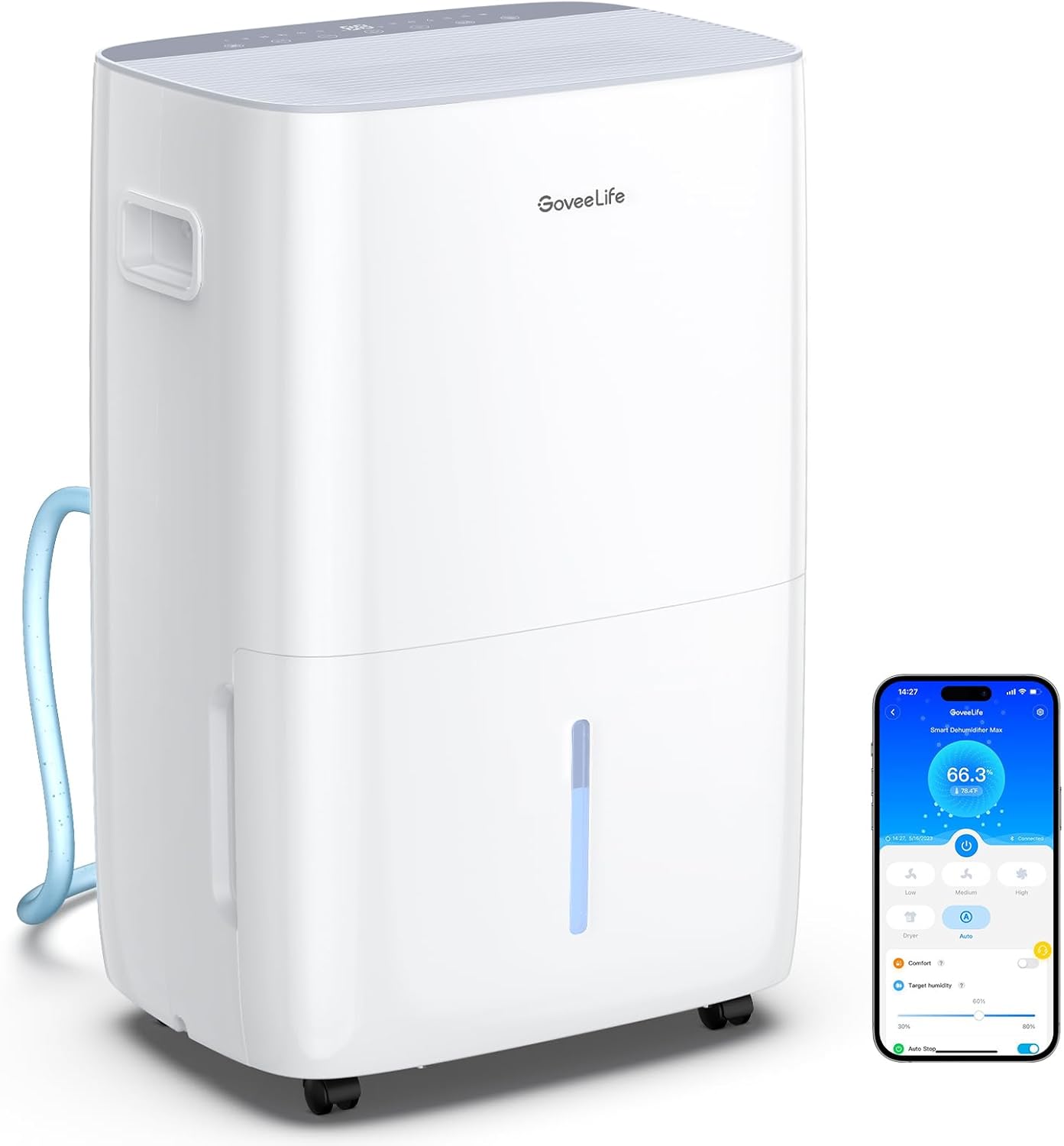
GoveeLife 50-Pint
GoveeLife
★4.7·4,964 ratings
Energy Star Most Efficient certified with the lowest electricity cost over time. Good smart features at a mid-range price.
- + Energy Star Most Efficient certified
- + Lowest long-term electricity cost
- + Wi-Fi with Alexa and Google
- + Good price-to-performance ratio
- - Standard 1.8 gal tank
- - No built-in pump
- - Slightly louder than Midea (~50 dB)
Complete Your Setup
Inexpensive add-ons most buyers pair with a new dehumidifier.

★4.6·5,341 ratings·$12.97
Run continuous gravity drainage to a floor drain or sump so you never empty the tank. Standard 1/2-inch hose port fits most units.
View on Amazon →
★4.7·5,250 ratings·$47.04
No floor drain nearby? This pump pushes water up and out to a sink or window. Pairs with any unit that lacks a built-in pump.
View on Amazon →
★4.6·62,078 ratings·$8.97
Track room humidity so you know your unit is hitting target. Aim for 30 to 50 percent to stop mold and dust mites.
View on Amazon →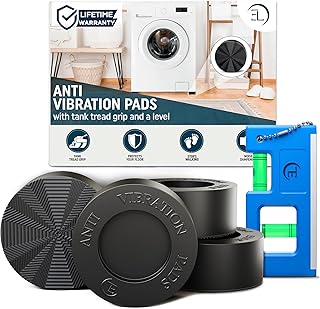
★4.3·4,927 ratings·$18.95
Stop compressor hum and walking on hard floors. Slip these under the feet to cut noise and keep the unit in place.
View on Amazon →
★4.6·18,723 ratings·$14.99
Share one spigot or drain line between the dehumidifier and another hose. Lead-free brass with independent on/off valves.
View on Amazon →Sizing for a Home Over 2,500 Sq Ft
Every 50-pint pick on this page carries a 4,500 sq ft coverage rating, but that number assumes an open layout and moderate dampness. Closed doors, hallways, and multiple floors all cut real-world reach, which is why sizing a whole house by square footage alone misleads. The better rule is one 50-pint unit per level that actually has a humidity problem. A 3,000 sq ft two-story with a damp basement usually needs one unit in the basement, not three scattered through the house, because the basement is where the moisture enters. If the main floor also reads above 55% RH with the basement unit running, add a second 50-pint unit centrally on that floor. Skip the jump to 70-pint models for whole-home use: they pull more water from the room they sit in but do not push dry air any farther. Two 50-pint units in two locations beat one 70-pint unit in one spot every time.
Portable vs. Ducted: The Honest Math
A ducted whole-home dehumidifier from AprilAire or Santa Fe is the more complete fix: it treats every room through your existing ductwork, drains to a line you never see, and lasts a decade or more. It also starts around $1,500 for the unit alone and typically lands between $1,500 and $3,500 installed. A 50-pint portable costs $218 to $260. Ducted earns its price when your home is over 3,000 sq ft, humidity is a year-round problem, or a sealed crawl space needs dedicated treatment. For everyone else, the portable route costs a tenth as much, installs in ten minutes, and can be moved or returned if it turns out one unit is enough. We have not added a ducted unit to our picks because none currently clears our review-count threshold on Amazon; if you go that route, get quotes from an HVAC contractor rather than buying blind.
Placement: Getting Whole-House Effect from One Unit
Placement decides whether a portable acts like a room unit or a whole-house unit. Put it at the moisture source, which for most homes means the basement, since dry air there stops moist air from migrating upward. If humidity is even throughout the house with no wet lower level, put the unit in a central hallway on the main floor instead. Then help the air move: leave interior doors open, and run your HVAC fan in the On position so the blower circulates dried air through every room. Set up continuous drainage (gravity hose to a floor drain, or a pump model like the GE if there is no drain) so the unit never sits idle with a full tank while humidity climbs back up.
Frequently Asked Questions
Do I need a ducted dehumidifier or will portables work for a whole house?
Portables work for most homes. One 50-pint unit placed at the moisture source, usually the basement, holds a home up to about 3,000 sq ft under 50% RH, because dry air at the bottom stops moisture from migrating upward. A ducted system ($1,500 to $3,500 installed) makes sense for homes over 3,000 sq ft, year-round humidity problems, or sealed crawl spaces. Try a $260 portable first; you can always add a second unit or upgrade later.
What size dehumidifier do I need for a 2,500 sq ft house?
Start with one 50-pint unit (DOE 2020 rating) placed at the moisture source. The Midea Cube 50 and GoveeLife 50-Pint are both rated for 4,500 sq ft, which covers 2,500 sq ft with margin in an open layout. If closed doors and multiple floors keep part of the house above 55% RH, add a second 50-pint unit on that level rather than buying one larger machine. Coverage, not pint capacity, is the limit in large homes.
Where should I place a portable dehumidifier for a whole-house effect?
At the moisture source. For most homes that is the basement, since basement moisture rises through the house via the stack effect. If there is no damp lower level, place it in a central hallway on the main floor. Leave interior doors open and run your HVAC fan in the On position so the blower distributes dried air to every room. Use continuous drainage so the unit never stops on a full tank.
Can one dehumidifier cover two floors?
Often, yes, if the moisture comes from the lower floor. A 50-pint unit drying a damp basement typically drops humidity on the floor above as well, because it cuts off the moisture rising through the house. What one unit cannot do is pull moisture down from an upper floor. If each floor has its own humidity source, or upstairs stays above 55% RH with the downstairs unit running, run one 50-pint unit per problem floor.
How much does a whole-house dehumidifier setup cost to run?
A 50-pint Energy Star portable draws roughly 500 watts. At 12 hours per day and the national average of $0.16 per kWh, that is about $1 per day or $30 per month during humid season; two units doubles it. Once the target humidity is reached, the unit cycles on and off and costs drop. Energy Star models like the GoveeLife 50-Pint save 15% to 20% over standard units. Use our energy cost calculator for your local rate.
Sizing Note
Our calculator flags whole-home scenarios when the space exceeds 2,500 sq ft and calculated capacity exceeds 55 pints/day. At that point, split the load across two 50-pint units rather than hunting for one bigger portable.
Related Guides
Or use the sizing calculator and the basement size chart for exact pint capacity.
Not sure this is the right fit?
Use our free sizing calculator to get a personalized recommendation based on your exact room size, dampness level, and climate zone.
Try the Sizing Calculator